
Climate Emotions: When the World Around Us Is Changing
Climate emotions are among the fastest-growing concerns showing up in therapy rooms across Toronto and Ontario, and having language for what you’re experiencing can be the first step toward understanding it.
There is a relatively new field of psychology emerging called climate psychology, which sits at the intersection of psychology (the human experience) and environmentalism (what is happening to Mother Earth). The overlap of these two fields began in the 70s, and at its heart is a simple belief: if we understand that human beings are deeply interconnected with life on this planet, then what happens to the planet affects us psychologically.
As environments all over the world are changing, we are beginning to develop a language for understanding new psychological experiences that many of us have never had words for before; we call them climate emotions.
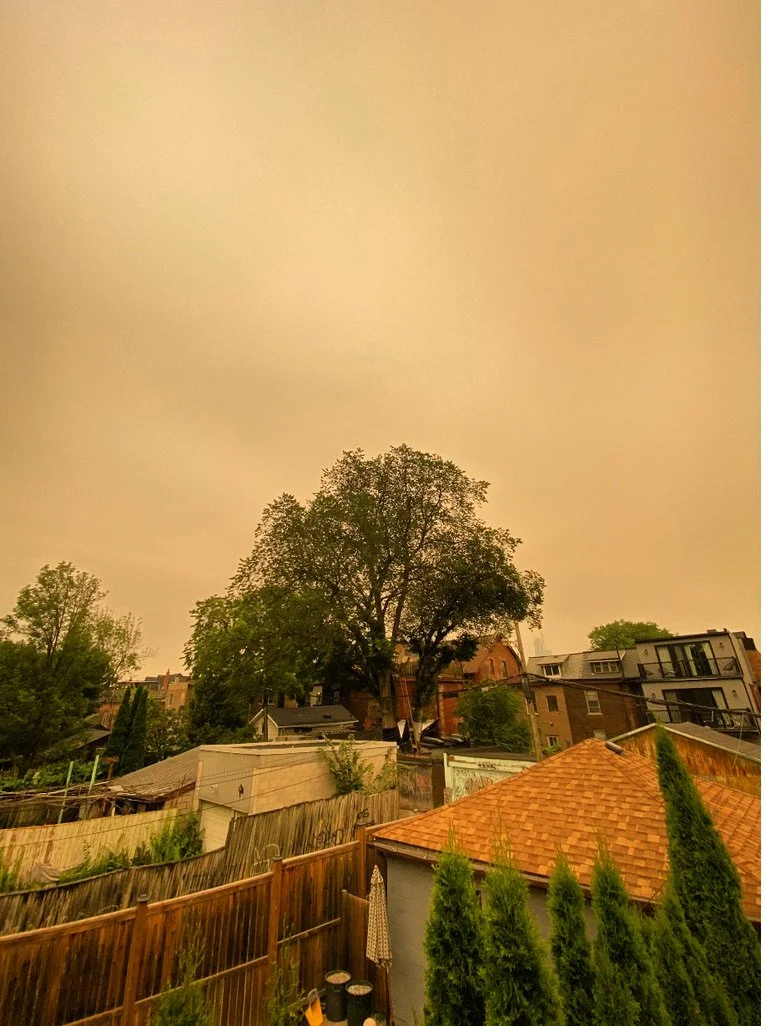
Some climate emotions include ecological anxiety, ecological grief, solastalgia, and climate dread. There are others and this list is always growing.
As a climate-aware therapist, I work within this field, and one of the most important things I want others to know is that these experiences are not symptoms of something being wrong with us, they are not something to be pathologized or diagnosed. They are deeply reasonable human responses to recognizing what is happening to our world.
What Are Climate Emotions?
Climate emotions are emotions connected to environmental degradation and/or the ecological crisis.
Here in Ontario, climate change is becoming increasingly difficult to experience as something happening somewhere else. Here and now, we are experiencing extreme heat, increased wildfires, smoke-covered skies, intense cold, tornadoes, flooding, severe storms, and biodiversity loss.
We are noticing this land is changing in real time.
And so, if our environment is also a part of our sense of safety, identity, memory, belonging, and home, then these changes are going to affect us deeply.
For some people, this will show up as feelings of anxiety or dread, also known as eco-anxiety or eco-dread. For others, their primary emotion might come as grief, known as eco-grief. Often there is also anger, guilt, helplessness, dread or even numbness present- all of these emotional experiences are valid.
Ecological Grief Is Not New
As a practitioner, I feel it is important to name that ecological grief itself is not a new human experience.
Indigenous peoples around the world, including here in Canada, have lived through generations of land dispossession, environmental destruction, disruption of relationships with land, and the degradation or disappearance of ecosystems and other forms of life.
As well, we living in Canada should understand we are living in what is considered to be the Global North, and that many communities around the world, most of which are in the Global South and are generally marginalized populations, have been living with the direct consequences of ecological crisis for quite some time.
So while there is a new developing psychological language called Climate Emotions, we should be careful about describing some of these experiences as entirely new.
What is new about ecological grief is the scale of how many people across the world, of all ages, regardless of borders, are beginning to feel it.
How Eco-Anxiety and Ecological Grief Show Up Differently Across Populations
Another important consideration is that ecological grief is not one single experience. Here are some examples of different populations to consider:
Young people may be grieving a future that is no longer possible, while knowing that they will inherit many of the consequences from their elders. There can be anger and a rupture of trust between generations alongside their fear.
Farmers may experience ecological grief through their livelihoods: watching extreme weather affect crops, soil, animals, growing seasons, and the systems their lives depend upon. Generations of families who have lived as farmers are losing connection to their heritage and lineage, as well as their ability to support themselves – which usually results in selling the farm and losing connection to generational land.
Conservationists, environmental scientists, land defenders, climate workers, and others who spend their lives paying close attention to ecological change may repeatedly witness losses that much of the wider population has not yet noticed.
And some people may feel very little at all. Sometimes that signals a disconnection from nature or lack of awareness. But feeling nothing can also be protective. The scale of what is happening can be so overwhelming that numbness, avoidance, or turning away becomes one way of coping with something we do not yet know how to hold.
Eco-Anxiety and Ecological Grief are Healthy Responses to an Unhealthy Situation
Within climate psychology, ecological grief and eco-anxiety are understood not as something pathological, but as a healthy response to loss. Grief tells us something mattered. Ecological grief shows us that we recognize ourselves as connected to other forms of life and that we care about what is happening to them.
However, ecological grief is also different from many of the losses we traditionally think about when we talk about grief. For ecological grief, there is no clear ending. The scale of what we are grieving also crosses space (this is happening all over the world), and time (this is not just happening now).
We are not grieving something that happened and can eventually be integrated into our lives - ecological loss is ongoing. New losses continue to happen, and human beings alive today will continue encountering ecological change throughout their lifetime.
So we must ask ourselves: “How do we learn to live alongside grief that will keep returning?”
From Climate Dread to Active Hope
For some people, the enormity of the ecological crisis leads to dread: What am I supposed to do about all of this? And when a problem feels too large for any one person to solve, helplessness can easily become hopelessness.
One of the most powerful things I have witnessed through facilitating Climate Cafés and other spaces for ecological grief is how much changes when people discover that they are not carrying these feelings alone.
There is a Swedish proverb I often return to that translates roughly to: shared joy is doubled; shared sorrow is halved.
Talking about ecological grief does not make the ecological crisis disappear. But there can be something profoundly transformative about having our grief witnessed, sharing it with others, and returning to these conversations again and again.
From there, we can begin to move toward what is sometimes called active hope.
Active hope is not optimism. It does not require believing that everything will work out. It asks us to consider what we care about, what kind of world we want to participate in, and what actions are available to us now. That might mean becoming involved in our communities, changing something within our sphere of influence, protecting a place we love, making art, joining collective action, spending time building a relationship with the natural world, or simply allowing ourselves to pay attention again.
Ecological grief can also bring us face-to-face with moral injury. Moral injury is the painful recognition that we participate in systems that contribute to harm, while also not being able to easily remove ourselves from those systems.
Moral injury is increasingly recognized within climate psychology as a distinct dimension of climate-related distress, and one worth exploring in a supported therapeutic space.
And so, the work is not to get rid of ecological anxiety or finally “get over” ecological grief. It is learning how to stay connected to ourselves, to one another, and to the living world all while continuing to find meaningful ways to respond.
Ecological Grief does not have to happen in isolation, and Active Hope is something we can keep making together.
Organizations like the Climate Psychology Alliance and the Good Grief Network offer community spaces and resources for those navigating climate-related distress. Amália/Emily has trained with both organizations and serves as the Ontario Regional Coordinator for the Climate Psychology Alliance. Exploring these alongside individual therapy at Blueprint Counselling can offer both personal and collective support.
Frequently Asked Questions About Climate Emotions and Eco-Anxiety Therapy in Toronto
What are climate emotions?
Climate emotions are emotional responses connected to environmental degradation and the ecological crisis. Eco-anxiety, ecological grief, solastalgia, and climate dread are among the most common. They might show up as persistent worry about the future, grief when reading environmental news, numbness, or a sense of overwhelm. Therapists in Toronto and across Ontario are seeing these experiences named in sessions with increasing frequency.
Is eco-anxiety a diagnosable condition?
Eco-anxiety isn’t a clinical diagnosis. Within the field, many believe it shouldn’t be pathologized as diagnosable, because doing so shifts responsibility away from systems and onto the individual. Eco-anxiety and ecological grief are understood as healthy and reasonable responses to real losses happening in the world. That doesn’t make them easy to carry, and support is still worthwhile.
What’s the difference between eco-anxiety and ecological grief?
Eco-anxiety tends to be future-oriented, centred on fear about what’s coming. Ecological grief focuses on losses that have already occurred, and those in the future we know are coming, whether that’s the disappearance of species, ecosystems, or a felt sense of safety in the natural world. Many people hold both at the same time.
What is a Climate Café?
A Climate Café is a facilitated space where people gather to talk honestly about their feelings about the climate and the future. Unlike action-planning meetings, Climate Cafés focus on witnessing and being witnessed in grief and fear. Emily Pleasance has experience facilitating these spaces alongside her individual therapy practice in Toronto.How can therapy help with ecological grief or climate dread?
Therapy offers a space to process climate emotions without having to minimize or resolve them. Amália/Emily Pleasance works with clients in Toronto and virtually across Ontario using an integrative approach that includes expressive arts, body-based awareness, IFS, and connection to nature. Climate emotions often live in the body as much as the mind, and creative and somatic approaches can reach parts of the experience that talk therapy alone sometimes can’t.
What is active hope and how does it relate to climate anxiety?
Active hope, as understood within climate psychology, doesn’t require believing that everything will work out. It asks what you care about and what actions are available to you now. Joanna Macy and Chris Johnstone’s work on active hope has become an important framework for people navigating climate-related despair without bypassing the grief underneath it.
Ecological Grief does not have to happen in isolation, and Active Hope is something we can keep making together. If climate emotions are weighing on you, Amália/Emily Pleasance offers climate-aware therapy in Toronto and virtually across Ontario. Book with her today!